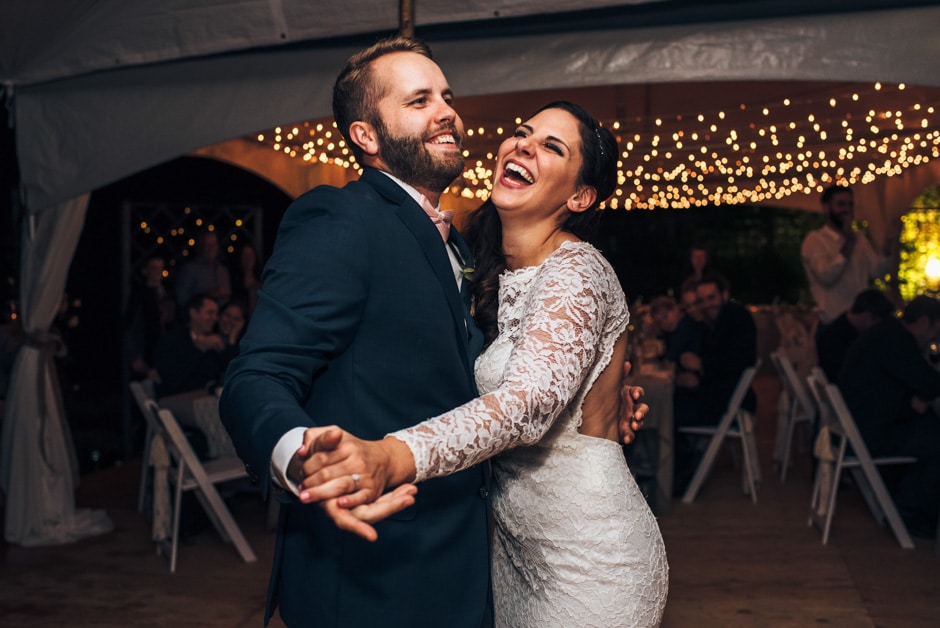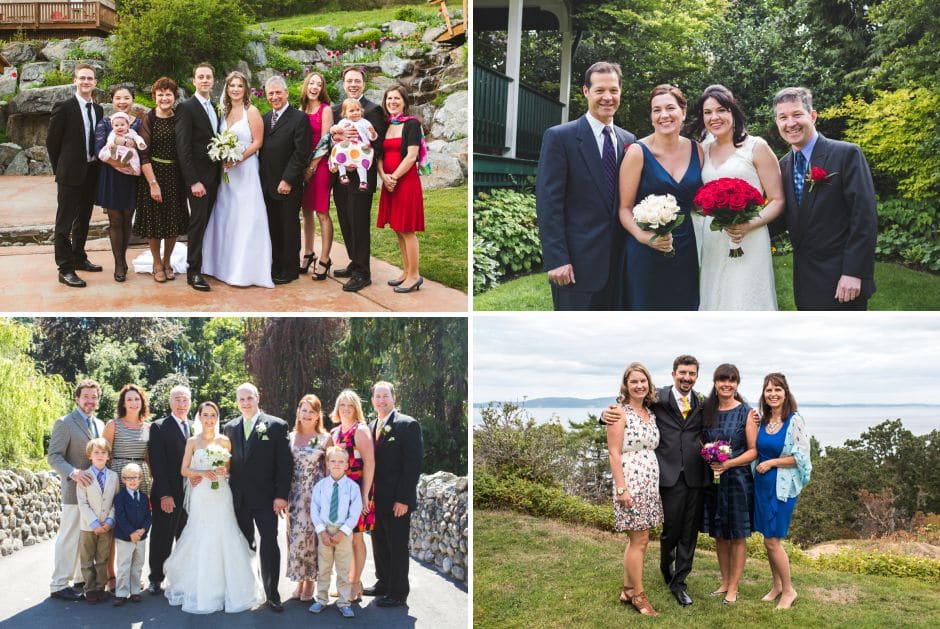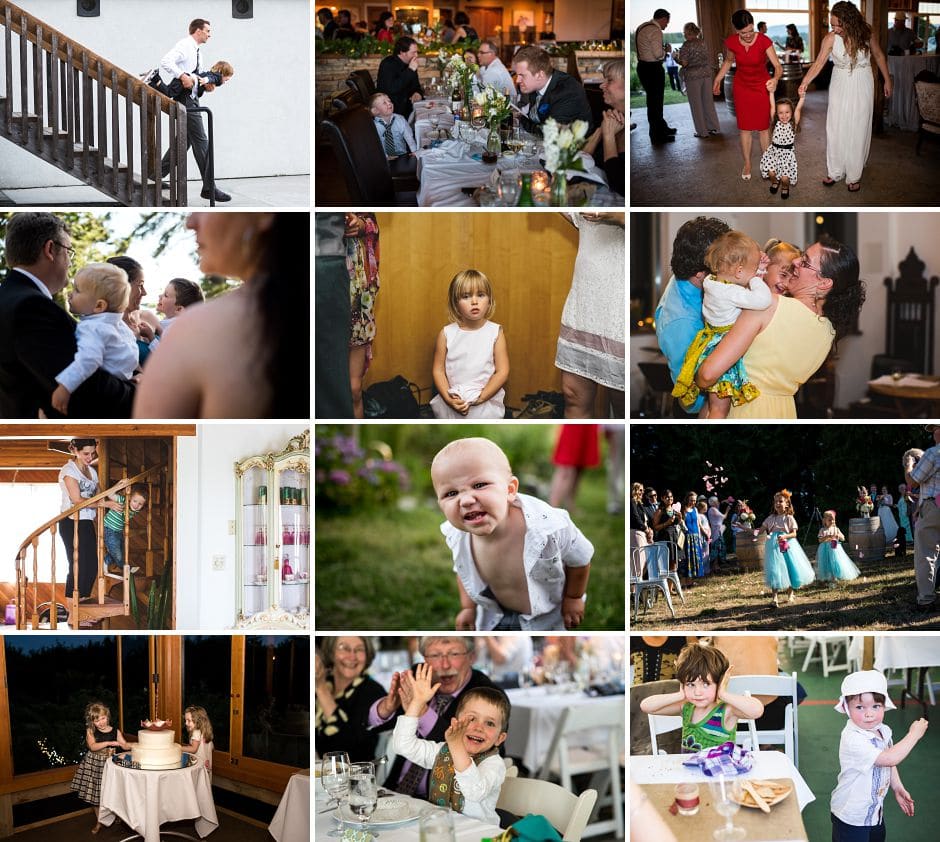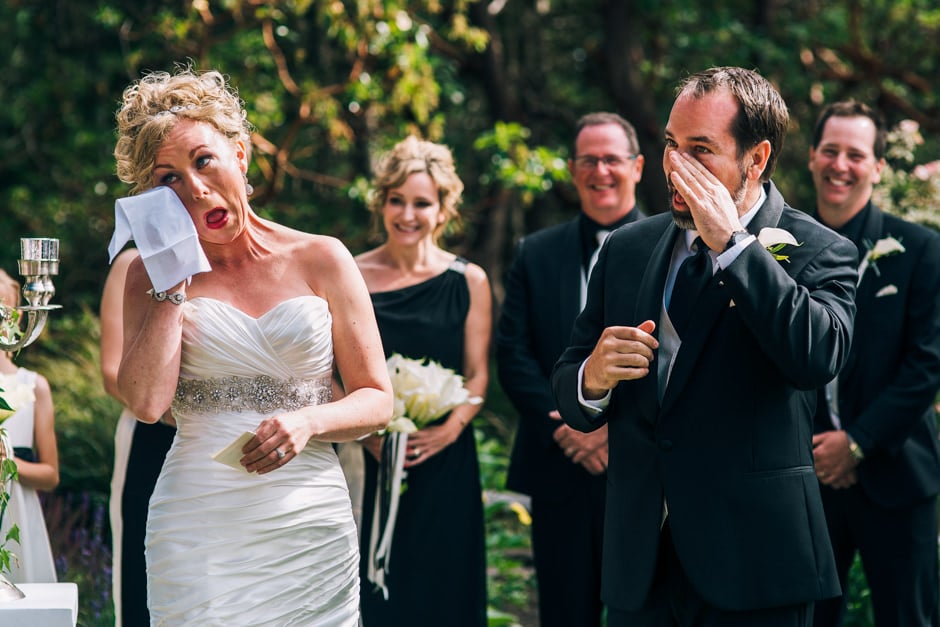
I want to start writing a bit about different takes on wedding traditions. I love it when my clients put their own spin on the typical wedding day events and I think it makes the day more fun and meaningful when they personalize it.

Today I want to talk about is the first look, which is the first time that the couple sees each other in their wedding clothes. This also ties into the processional down the aisle and the usual bride being given away by her father.

The First Look

Many photographers try to convince their clients to do a first look before the wedding. Their main reasons are to have more time to spend on portraits and also to get a clear and intimate shot of the couple seeing each other for the first time that day. I think it can also reduce the nervousness many people feel about walking down that aisle in front of all their guests. I personally love it because it allows the day to flow more naturally from the ceremony to the reception, possibly eliminating that huge gap where the guests wander aimlessly while the couple has their portraits taken. However, I don’t try to convince my clients to do things a certain way; I want them to schedule their day in a way that best suits them.

Below are some photos from that first moment my clients saw each other before the ceremony.

The Anti-First Look

Some couples choose to forgo the first look altogether and get ready together. I’ve experienced this mostly with same sex couples, most of whom chose not to have it documented. I think it’s a great option for any couple who wants to feel a bit more relaxed before the ceremony and also get some sweet candid photos of the two of them while they prep for the big day.

Giving the Bride Away

The traditional wedding ceremony includes the bride being walked down the aisle by her father and given away to the groom at the altar. Some couples have stepped away from this tradition for various reasons: some because the idea of the bride’s parents giving her to her husband is old fashioned, some because they want to include different family members in this ritual, and for various other reasons.

During one of my wedding rehearsals, the officiant asked “who gives this woman to this man?” and her father stood up and said “she gives herself away,” which I thought was pretty awesome. He did still walk her down the aisle the next day.

One of my brides chose to have her divorced mother and father walk her down the aisle, which is a great way to include both sides of a divided family. Another bride had both her birth father and adoptive father give her away. For weddings where the bride’s father wasn’t able to attend, they’ve had their mother or an uncle walk them down the aisle.

Walking Together

Some couples choose to walk down the aisle together, which I think is a lovely way of showing that the day is about them as a couple and not placing such a focus on the big white dress.

Below are some photos of my favourite processional I’ve seen. The couple had done a first look prior to the ceremony. The bride walked down the stairs at Sea Cider to meet the groom at the bottom and then they walked down the aisle together. When they got to the front row, they hugged their immediate family members. It was the sweetest moment between the couple and their families.

I’d love people to consider putting their own spin on these traditions more often. Make your wedding completely your own, because it’s all about the two of you.


This is a guest post by Toronto jewellery designer Michelle Francoise (check out her site because it’s adorable).

This blog entry is about my favourite jewellery accent, pearls!

This information is intended for brides that are contemplating wearing pearls on their special day. However, anyone that is thinking about purchasing pearls can definitely benefit from this information.

Pearls are one of the oldest and hottest trends in today’s jewellery & wedding fashion! Not only will these natural beauties complement any wedding dress style, but they are HOT, HOT, HOT, right now!

First, let’s start with an introduction to pearls. I’ve broken them into four categories; natural, cultured, freshwater and synthetic.

Natural Pearls (REAL):

• A natural pearl is formed when foreign matter (i.e. sand) enters the body of an oyster. As a protective mechanism the oyster deposits layers of nacre (lustre that makes the pearl shiny) over the irritant. Over time, the oyster will deposit layers upon layers of nacre and this is how the pearl is formed.

• Their value is higher because they are rarer. Very few oysters produce perfectly round pearls.

• They are made in salt water (Akoya, Tahitian and South Sea).

• Pearls are naturally heavy.

Cultured Pearls (REAL):

• A round bead is inserted into the oyster and then the process begins by depositing layers of nacre around the bead.

• The price tag is significantly less for cultured pearls.

• Cultured pearls are considered ‘fake’ as they are man-made. However, they are still real pearls; they just had man help with the beginning stages. The only person that will know that they are cultured or natural is you.

• Same as natural pearls, cultured pearls are naturally heavy.

• More durable than natural pearls.

• Cultured pearls are designed to mimic natural pearls.

Freshwater Pearls (REAL):

• Freshwater pearls are cultured pearls.

• They use a pearl-making process called “activation”, which is injecting a foreign substance into the mollusc. Unlike in cultured pearls where they insert a bead, a small cut is made into the mollusc’s mantle and a little bit of similar tissue is inserted.

• Freshwater pearls are not easily mistaken for real pearls; it’s more common to find oblong and oval freshwater pearls.

• More durable than natural & cultured pearls.

• They are low quality pearls and can be made and marketed very quickly.

Synthetic (FAKE):

• Typically made from plastic or glass.

• If the pearls are made of plastic, they will be light and airy.

• Glass pearls are made from glass beads that are covered in a pearl coloured lacquer (paint); they are heavier than real pearls.

Real or Fake Pearls?

Many brides have a hard time deciding whether they want to invest in real pearls for their wedding. There are a few things to consider before making this decision, such as:

1) Will you wear them again? If you don’t see yourself wearing pearls again, you might as well go faux. Honestly, they have some great fakes out there. Why waste part of your budget on real pearls when you can put the money towards something else like your honeymoon! ;) As for me, I can wear pearls all-day and every day, therefore I would make the investment, but… that’s just me. ;)

If you’re like me… and want to make the investment, here are some fake tests to try out!

* FAKE TEST 1: You can get real up and personal with your pearls by rubbing them on your teeth. However, I wouldn’t recommend this method because your tooth enamel is abrasive on pearls and will scratch and damage them, if they are real. Of course, I’ve tried this method; it works! If the pearls feel ‘gritty’ against your teeth, they are real. If the pearls are smooth, they are faux. Instead of ruining your pearls with your teeth, try this simple method: rub the pearl onto another pearl from the same strand; you will feel the ‘grittiness’ when you rub them if they are real. Fake pearls will feel smooth against each other.

* FAKE TEST 2: Pearls are naturally heavy. If the pearls are made of plastic, they will be light and airy. Nowadays, most fake pearls are made from glass beads that are covered in a pearl coloured lacquer (paint). Another test you can to do tell whether they are real or glass is to rub nail polish remover onto a small area on the pearl. Nail polish remover will not harm real pearls; however, it will remove the lacquer (paint) from glass pearls. Beware, this test method will damage the glass pearls by removing the lacquer from the glass pearls. TIP: It’s rare that all pearls will be the same in size, colour and lustre. If all the pearls look exactly the same… either they cost a fortune or they are faux. Usually pearls aren’t perfectly shaped; they may be slightly flat on one side or have a bump here and there.

2) Budget. How much money do you have put aside for your bridal jewellery? Real pearls can cost a small fortune… depending on the size, lustre and number of pearls in your piece.

TIP: One way to cut your costs is to go to a pearl wholesaler or bead store, buy your perfect pearls and then pay someone (local jeweller or jewellery designer) to put it together for you. You’ll just pay the labour and not the pearl mark-up price. In this case, you may want to over buy, because not every pearl will be perfect. Also, it will ensure that you get more than enough in case you lose a bead or two throughout the years… you’ll have backups to replace the missing ones.

3) Choose a style that will complement your dress, hairstyle and personality. Before you start thinking about your wedding jewellery, choose your dress style and decide on your hairstyle. Your jewellery should complement your dress neckline and hairstyle.

For example: Long earrings look great with an up do. However, sometimes less is more. Depending on the length of your earrings, you may not require a necklace. You may opt for a long earrings and a bracelet, which will allow you to allocate more money towards other things on your wedding wish list.

Plain or Garnished?

Pearls are versatile and can be combined with a variety of materials, such as: crystals, multi-faced glass beads, silver/gold beads and stones. You can always dress your pearls up by adding an accent colour that may complement your wedding colours or your flower bouquet. The most popular way to spice up pearls for your wedding is by using Swarovski crystals.

Swarovski crystals are exquisite, but you will pay for them. An alternative that I offer brides on a budget is multi-faceted glass beads. They almost look the same, maybe not as sparkly, but the only way you can tell glass from crystal is the weight. Crystals are surprisingly heavy. Unless, your guests will be holding your jewellery in their hand and testing the weight, I’d suggest cutting your price tag in half and going glass.

Below is a sample of a real pearl and Swarovski crystal necklace and earring set I made for Jaime, the beaming bride! She wanted simple and elegant. Well, she got it…. in spades ;)

Photos provided by Michelle

I will pay for the real stuff, mainly because I know I will get some decent mileage on everything I buy (or make in my case).

Wear What You Want And Feel Comfortable In!

At the end of the day, it’s your special day. Wear what you want and feel comfortable in.

Don’t let your mother, maid of honour, family or any other outside influences tell you what you ‘should’ wear. You know your comfort zone and what kind of jewellery you want for your wedding.

Typically, I get clients that have been to every wedding shop and have exhausted all their resources… they see some stunning pieces… then turn the price tag over and just about die. They send me the photos and I try to mimic the look (if I can) and try to get it within their budget. If the Bride is happy, everyone is happy! ;)

Hopefully, my blog has helped you in your search for the perfect pearls that suit your budget and needs for your wedding. Also, it may have prompted you to ask yourself a few more questions before purchasing your jewellery, which is fantastic!

But, if you’re choosing pearls, you’re already a winner!

Michelle Francoise Ameerali is a Canadian jewellery designer that specializes in custom and made-to-order pieces, including earrings, hair accessories, brooches and necklaces. Her customers (including radio and TV personalities) are mostly young and trendy women looking for unique pieces to dress up their favourite outfit or complement their upscale wardrobe. Over the years, Michelle has helped brides create unique pieces to match their dress, style and personality. Currently, she’s creating limited edition items and plans on expanding her business online and through small independent boutiques. You can view and buy Michelle Francoise’s jewellery by visiting http://www.michellefrancoise.com/.

Lara’s note: Here are a few photos of my 2010 brides wearing pearls in various ways. I love the mixing of traditional and modern.


People are often nervous about having their portrait taken, especially by a professional photographer when the whole thing seems suddenly more important and serious.  I wanted to give some pointers to my blog readers, since I have many engagement sessions coming up.  Here’s my best advice, from years of experience taking photos of friends and strangers.

  • Wear something you feel comfortable in, both physically and appearance-wise.  You want to be able to move and run and jump and do whatever without fear of a wardrobe malfunction.  And obviously, you want to look your best.  If you have a physical feature that you don’t want to show-off, wear something that conceals it or draws your eye away.  You don’t want to be concerned with only standing a certain way during the whole shoot so that nobody can see your belly.  Wear what makes you feel good about yourself.  And bring a change of clothes or two if you’re just not sure.
  • Don’t be afraid that you’re “unphotogenic”. A good photographer will be able to pose you and light you in ways that will make you look great.  She will also never show you the images that you don’t look so great in, and everyone has them (just look at a tabloid magazine).  Most people think they’re unphotogenic because they’re used to seeing terribly lit and composed snapshots of themselves on Facebook.
  • Bring something to play with. I sometimes ask people to bring props, or I bring some myself, just to get them playing and relaxing in front of the camera.  It can take your mind off of posing and trying to look perfect, plus it makes for different and creative photos.  Some ideas: umbrellas, frames, balloons, fun hats or accessories, signs, furniture, sporting equipment, musical instruments, toys, etc.
  • Go to a location that’s familiar and comfortable to you. I love it when people choose a place that showcases their personality, like a beach that they walk to often or a coffee shop that they’re a regular at.  I think it also makes them feel like it’s just another day and takes their mind off the shoot.

  • Choose a photographer who can make anyone look beautiful. If everyone in her portfolio and blog is a size 2 and has tons of makeup on, and that’s not you, move on.  Find someone who showcases people like you, or at least a variety of different looks, and makes them all look amazing.  If retouching (i.e. skin smoothing, Photoshopping the eyes) is important to you, find someone who does that.  I very rarely retouch (and then usually only on request) because I think people are beautiful the way they really are and I think skin should look like skin, not plastic.  That said, I’ll take out a blemish or some other minor imperfection that will be gone in two weeks anyway.
  • More on choosing a photographer – once you’ve made contact by e-mail or phone, choose a photographer who is friendly and genuine.  Choose someone who seems excited to work with you and gives you the attention you deserve.  If you’re looking for something big like an engagement and wedding photography package, meet with her in person if you can.  You’ll want to make sure that her personality meshes with yours well and she listens to your ideas.
  • Be yourself! This is really easy if it’s a couple shoot, because you can play off your significant other and focus on them instead of the camera.   If it’s just you in the portrait, consider bringing a friend to either split the session with you or just to keep you company from outside the frame. I try not too pose people too much because I want their personalities to show.  I talk to people during the shoot and tell them to talk to one another.
  • Get silly. Make faces, run around, jump, dance, do  your best Zoolander impression.  Even if those things don’t make for great portraits, the expression on your face after you finish will.
  • Tell the photographer how you feel. If you’re nervous, don’t be afraid to share that.  I often ask people how comfortable they are in front of the camera and gauge their reactions.  If they’re nervous, I will sometimes pose them more, show them some photos on the back of the camera to assure them they look awesome, or spend more time getting to know them and warming them up before shooting a lot.